Operating a “lean but mean” team, Willie oversees the day-to-day operations and a fleet of district managers, while Eduardo manages finance, development, and legal claims.
Their legacy surveillance provider was a “dumb” system that required constant manual oversight.
“It was a surveillance system. I wasn’t super pleased with it for the simple fact that it really didn’t have any features to really help you drive and run your business. Everything was manual,” Willie recalls. “You had to have somebody watching all the video in order to have any kind of solution on the system.”
For a leadership team that spends most of its time in the field, the inability to manage security from a mobile device was a dealbreaker.
“Our old system was very clunky on mobile and I had to manage it mostly from my laptop,” Willie notes. “Being in the field most of the time, it was very difficult to manage.”
The true cost of “dumb” video became clear during a critical investigation into missing bank deposits. An armored car service was suspected of losing — or taking — three separate deposits. Because the driver did not follow a fixed schedule, the team had no choice but to comb through massive amounts of footage.
The legacy system would have required Nova Shores Restaurants to pay a full-time employee just to watch video for theft, a manual process that was unsustainable for a franchise looking to scale.
The impact of Solink was felt “right away,” providing a level of visibility that moved the team from reactive searching to proactive coaching.
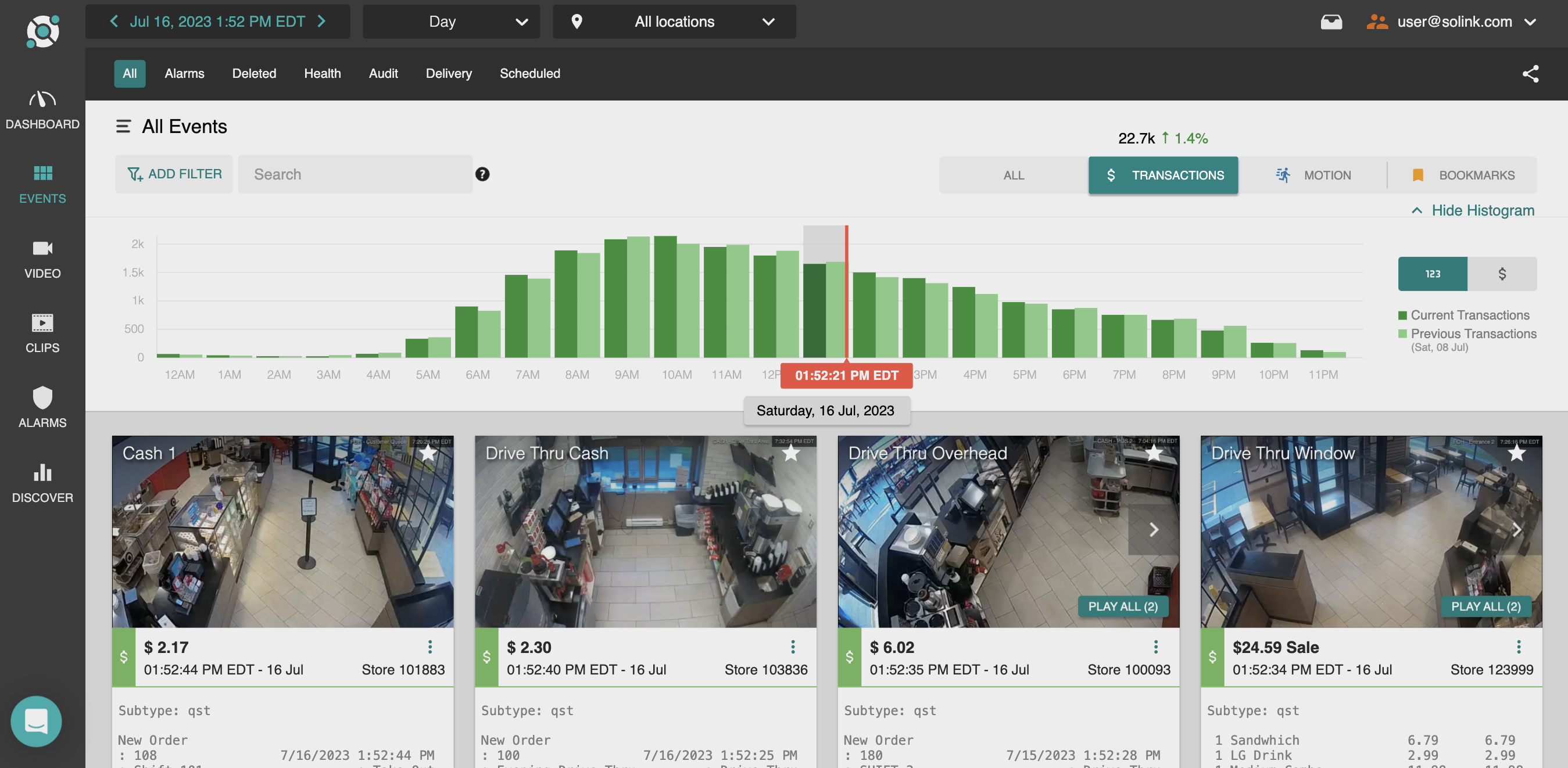
Today, Solink’s searchable platform enables a “trust and verify“ model. As Willie Romeo explains, when “somebody says something, but you still need to trust and verify if it’s real or not,“ it’s easy for leadership to now pull the truth in minutes from their mobile devices. This visibility transforms video from a security tool into a foundation for “teaching and coaching,“ allowing managers to “identify where we can do some things differently and better.“
Nova Shore Restaurants is already looking toward the next phase of its digital transformation, integrating Solink’s AI drive-thru solution with their own back-of-house management system. This “full court press” will allow the team to automatically identify drive-thru bottlenecks, monitor counter service levels, and ensure managers are present on the floor during peak hours.
For Eduardo, the shift to Solink represents a fundamental change in how they protect their investment. “Once you’re able to see how other people use Solink, it may actually uncover a lot of things that you haven’t even thought about.“
For QSR operators, the decision to overhaul legacy infrastructure is rarely about the technology itself, but about the practical impact on the bottom line and daily operations. Willie Romeo emphasizes that the most reliable vetting process is looking toward peers who are running the same business model.
As Willie advises other QSR operators: “If a franchise is investing in a system, it’s because they believe in the system and they think it’s going to benefit them. Go to a restaurant or go to a business that’s like yours and ask questions.“